
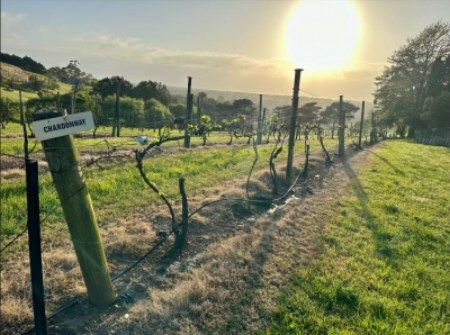
Agritourism draws visitors to rural areas. From farm gate experiences of food and drink to farm stay accommodation, agritourism connects visitors to farms.
Agritourism enables farmers to diversify, by creating additional income sources through showcasing their farm and their produce. The income is from farm gate services and farm stay accommodation.
Agritourism provides economic benefits for rural and regional places. Agritourism provides local jobs, supports local tradespeople, builds skills, creates youth pathways, and supports lasting community infrastructure.
NSW Planning supports agritourism. This is banner is from its webpage.
We have made it easier for farmers to use their land for agritourism to complement their existing agricultural businesses.
Why is it, that despite these good intentions the reality is that agritourism in NSW is ring fenced by planning restrictions that work against agritourism?
The recent decision of the New South Wales Land and Environment Court of Baillie Wines Pty Ltd v Camden Council [2026] NSWLEC 1333 by Commissioner Gray on 5 June 2026 shows how planning restrictions for rural properties are working against agritourism.
Commissioner Gray ruled that the Camden Council planning scheme did not permit Baillie Wines to extend its current cellar door offering to agritourism activities of farm gate food and drink services and did not permit farm stay accommodation to be built.
This is an analysis.
What agritourism activities did Baillie Wines propose?
Historically, since 1950, Ballie Wines have operated a winery with a liquor licence on their farm at 40 Cobbitty Road, Cobbitty. In 1975 they obtained Council approval for a cellar door premises, with wine licence and barbeque area and car parking for 15 cars. In the following years they built a cool room, a storage area and a storage building, with Council approval. They obtained a liquor producer/wholesale licence in1982.
The farm has an area of 10.27 ha, enough for a small vineyard. Triangular in shape, it is suitable for agritourism with a main road frontage to Cobbitty Road to the north and down to the Nepean River to the south-west.
Cobbitty is a semi-rural area, near the town of Camden, southwest of Sydney (65 kms from the Sydney CBD) with large lot residential dwellings as well as agricultural land uses.
The farm is zoned RU1 Primary Production under the Camden Local Environmental Plan 2010 (‘Camden LEP’). The objectives of the RU1 zone permit tourism-related uses that are compatible with the agricultural, environmental and conservation values of the land.
Farm stay accommodation and cellar door premises are both nominated permissible uses. But farm gate food and drink premises are classified as non-permissible commercial uses. And farm stay accommodation is restricted to tents and caravans.
In 2023, Baillie Wines made a Development Application to Camden Council for:
- The use of the existing sheds for food and drink services with a proposed gross floor area (GFA) of 617m2;
- Alterations and additions to existing sheds so that they comply with the Building Code of Australia, and accommodate a wine tasting area, bar, indoor and outdoor seating area, kitchen for food preparation, wine barrel storage and parts and equipment storage areas, brewery, wine making area, two fire pits and ancillary spaces including bathrooms, children’s gaming room and staff rooms;
- Use of seven existing concrete pads, a driveway servicing those pads, and two water tanks and pumps, for the purpose of farm stay accommodation;
- The construction of a range of associated buildings and structures including a foyer to connect the cellar door building to the existing sheds, a petting zoo and outdoor playground, roadworks and parking to accommodate 129 car spaces (with an overflow car park with 65 car spaces), four vehicle access points onto Cobbitty Road, and an on-site loading area;
- The use of the land for intensive plant agriculture for the grapes, hops and market garden.
The proposed development retained the cellar door use, and the residential use of the second storey of the cellar door building.
In May 2024, the Camden Council refused the Development Application because the agritourism uses of farm gate services and farm stay accommodation were tourism-related uses that were ‘not compatible with the agricultural, environmental and conservation values of the RU1 Primary Production zoning’.
Why were the proposals made by Baillie Wines rejected?
Commissioner Gray said that the RU1 Primary Production zoning restrictions for ‘farm gate premises’ and ‘farm stay accommodation’ required the activities to be:
on a commercial farm
and
ancillary to the farm
Only if the on a commercial farm restriction was met, does consideration turn to the ancillary to the farm restriction. Both must be satisfied.
The on a commercial farm requirement
The Camden LEP contains this definition:
commercial farm means a farm on which agriculture is undertaken that is—
-
- on land categorised as farmland under the Local Government Act 1993, section 515, or
- a primary production business within the meaning of the Income Tax Assessment Act 1997 of the Commonwealth,
or part of a primary production business … that …has temporarily ceased to be a primary production business because of a natural disaster, including a drought, flood or bush fire.
In this case, paragraph (a) did not apply because the land was not rated as farmland by the Camden Council. Council had rejected the farm rates concession application made by Baillie Wines because it was not satisfied that the land's dominant use was for a commercial farming business or industry (such as grazing, horticulture, or crop growing) which had a ‘significant and substantial commercial purpose and character’ and was ‘engaged in for the purpose of profit on a continuous or repetitive basis’ to satisfy the section 515 requirements.
Ballie Wines therefore needed to demonstrate that it came within paragraph (b) as a primary production business.
Commissioner Gray examined the definition of primary production business in section 995.1 of the Income Tax Assessment Act 1997 (Cth), which is:
“primary production business” you carry on a primary production business if you carry on a business of:
-
- cultivating or propagating plants, fungi or their products or parts (including seeds, spores, bulbs and similar things), in any physical environment; or
- to (h) maintaining animals, dairy produce, fishing and aquaculture, pearling, tree plantation activities.
Commissioner Gray made these findings:
“The first requirement is that it is a farm on which agriculture is undertaken … there must be activity on the farm such as ‘Viticulture’ which is the cultivation of grapes for use in the commercial production of wine.”
This requirement was satisfied because the farm was used for ‘cultivation or propagating’ grapes. Tax returns relating to the growing of grapes as business activity had been lodged since 2022.
“The second requirement is … the agriculture is to be a “business” of a type described in section 995.1 of the Income Tax Assessment Act.”
This requirement was not satisfied because “The grapes [grown on the farm] are not intended for sale [as grapes] …. The intended business activities relate to the [use of grapes for] wine making, which is not a primary production business.”
Similarly, the growing of hops on the farm. The hops are not grown for sale as hops. The hops are use as an ingredient in the beer manufacturing process, which is not a primary production business.
The temporary cessation of business because of a ‘natural disaster’ alternative in paragraph (b) did not apply because the tax returns for the grape growing post-dated the years in which the natural disaster (drought conditions that occurred in 2017 to 2019) were said to have occurred.
Therefore, it was not a primary production business carried on within that definition in the Income Tax Assessment Act 1997, and so it was not a commercial farm within that definition in the Camden LEP.
The Council’s refusal of consent for the Development Application was upheld by Commissioner Gray for that reason.
The farm gate premises must be ancillary to the farm
Commissioner Gray went on to consider whether the farm gate services proposed, that is: ‘preparation and serving, on a retail basis, of food and drink to people for consumption on the premises’ were ancillary to the farm.
He provided a useful guide to farm owners because he is required to express his view on all issues raised in the proceedings, even though he had decided the case by finding that it was not a commercial farm.
The drink offerings must meet the definition of providing visitors with “agricultural products predominantly from the farm” to come within the requirement of ancillary to the farm.
Commissioner Gray dealt first with the wine:
If sold as grapes, they would have been agricultural products from the farm and ancillary to the farm. But they were not. “Instead, the intention is to use all of the produce for the making of a secondary product, wine, which will be sold commercially, either processed and sold at wholesale rates, or sold by the glass through on-site facilities.”
Therefore, the sale of wine was not ancillary to the farm, even though the grapes were an agricultural product grown on the farm.
Commissioner Gray then dealt with the beer.
“There is no business activity in relation to the hops itself that would be sufficient to constitute a primary production business. Instead, the entire hops fruit produce will be used as an ingredient in the beer manufacturing process that will take place on the site. The business carried on therefore relates to the sale of the manufactured product and is not a primary production business.”
Therefore, the sale of beer was not ancillary to the farm, even though the hops were an agricultural product grown in the farm.
At least 85% of the wine and beer sales were to be made at the cellar door. A cellar door is a farm gate business permitted under the Camden LEP. Wine had been sold at the cellar door on the farm for many years.
Could the sale of beer be permitted at the cellar door under the Camden LEP because the beer was brewed on site using hops grown on the property?
Commissioner Gray said:
“The experts agree that beer is a product manufactured by a brewing process using malt, water, hops and yeast. This manufacturing process comprises mostly water and is a transformational product using a number of ingredients. Beer is not an agricultural product predominantly from the farm, as the hops constitutes less than 1% of the total inputs into the production of beer.”
The answer is ‘no’. Beer is not an agricultural product. And a micro-brewery is not an ‘agricultural produce industry’. The permit for cellar door to sell wine under the Camden LEP does not extend to beer.
Commissioner Gray then dealt with the food.
“The scope of the food offering and the provision of other alcohol products (beyond the wine) goes beyond something that can be described as supplementary to the provision of the agricultural product. The food offerings include a range of main meals (in addition to light meals), and the beer offering is not ordinarily one that would be considered supplementary to wine.”
The Camden LEP requirement was that the food offerings were “agricultural products predominantly from the farm, supplemented by products from other farms in the region”.
The proposed menu for the main meals included nachos, barramundi, steaks, a burger, brisket pie and bolognaise.
Baillie Wines argued that the intensive plant agriculture proposed for the grapes, hops and market garden, and the evidence of past purchase and sale of cattle, were sufficient to satisfy the requirement of “agricultural products predominantly from the farm”.
Baillie Wines argued that Council’s interpretation of the definition of farm gate premises was so narrow that it would prevent it from serving tea, coffee or ice-cream without also having dairy cattle and coffee beans at the farm to provide for the same.
The Commissioner rejected this interpretation, placing the emphasis on ‘predominantly’. The ingredients for the meals menu were predominantly not from the farm.
Baillie Wines argued that it was sufficient that the food and drink offering ‘relates to’ relevant agricultural products. It proposed a wine pairing menu, as an ingenious attempt “to establish that the main meal “relates to” the wine”, which was a product from the farm.
Commissioner Gray concluded:
“The scope of the food offering and the provision of other alcohol products (beyond the wine) goes beyond something that can be described as supplementary to the provision of the agricultural product [wine]. The food offerings include a range of main meals (in addition to light meals), and the beer offering is not ordinarily one that would be considered supplementary to wine.”
“Food and drink premises is a type of commercial premises, which is a prohibited use on the site. Alternatively, it could be characterised as an artisan food and drink industry, which is similarly prohibited.”
The farm stay accommodation proposal
If the farm stay accommodation provides temporary accommodation to ‘paying guests of the farm’, then the provision of accommodation is ancillary to the farm.
The farm stay proposal is a separate and independent use from what was proposed for the food and drink services.
There is no requirement to provide visitors “with agricultural products predominantly from the farm” or services or activities related to those products (as it is for farm gate services).
The proposal was to use the existing concrete pads to build accommodation. If this was on a commercial farm it would be a permissible use as ‘farm stay accommodation’. But for reasons outlined above, the farm was not a commercial farm and the proposal was refused.
Under the Camden LEP, Baillie Wines was restricted to permitted accommodation uses consisting of a caravan park or camping ground.
Had this been a development application based on the Local Government (Manufactured Home Estates, Caravan Parks, Camping Grounds and Moveable Dwellings) Regulation 2021 (NSW), it might have received favourable consideration. See also the Agritourism and Farm Stay Accommodation Code.
Conclusions and comments
Planning restrictions for approval of farm gate services and farm stay accommodation were applied to refuse approval to the Baillie Wines family to extend its cellar door premises to include a food and drink services and a micro-brewery and to refuse farm stay accommodation to be built.
Cellar door licences have a long history. They were introduced in NSW as Colonial Wine Licences in 1862. They are issued to permit the sale of wine from fruit grown locally.
This is the definition in the Camden LEP:
cellar door premises means a building or place that is used to sell wine by retail and that is situated on land on which there is a commercial vineyard, and where most of the wine offered for sale is produced in a winery situated on that land or is produced predominantly from grapes grown in the surrounding area.
Note— Cellar door premises are a type of farm gate premises.
Less rigid planning requirements would enhance the agritourism experience
It would not be an excessive extension to permit the sale of food, along with a glass of wine, at cellar door premises. It would promote public health because food supplements the wine.
It should not be restricted to wineries. A farm gate at an apple orchard should be able to sell not only apples but apple pies.
It should be easier to build permanent farm stay accommodation, in the form of cabins or similar accommodation, on rural land. Simple buildings are enough. They don’t need stone walls, wood beams, and the vineyard vines vibe.
Cabins would fit within the NSW Short-term rental accommodation (STRA) rules which apply to permanent, lawfully constructed residential buildings. Moveable dwellings, including caravans and tents, cannot be registered on the official NSW Planning Portal STRA register for standard holiday letting.